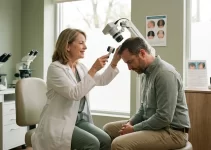
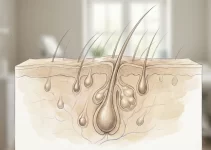
Hair loss often starts quietly. A wider part. A thinner crown. A hairline that doesn’t bounce back like it used to, often noticed in photos first. For many people with early to moderate androgenetic alopecia, that moment brings stress and confusion, and that makes sense. Hormonal drugs can feel like a big commitment right away, while surgery can seem too soon. That space in between is usually where interest in PRP therapy grows. Platelet-rich plasma, or PRP, is a treatment that uses your own blood to support hair regrowth. It’s non-hormonal and backed by clinical research, which matters to people who like evidence before committing. The goal is to help hair follicles become active again, instead of blocking hormones, which isn’t for everyone. It’s just a different option.
What makes PRP interesting is how it fits into the bigger picture. This article explains how PRP works for hair regrowth in clear, simple terms, without medical overload. It covers what PRP is, how it works at the follicle level, and what research actually shows about who may benefit most. No fluff. PRP is also explained within the wider move toward regenerative hair loss treatments, which is where things are heading. That includes how PRP compares with newer topical options meant to wake up dormant follicle stem cells through targeted stimulation, not hormones. Context matters. This guide is for people who want science-based options without relying on hormones. Straightforward, in my view.
What PRP Therapy Is and Why It Matters for Hair Loss
Many people are drawn to PRP therapy because it’s very focused. The treatment stays on the scalp, and that targeted approach often feels comforting, especially for anyone concerned about full‑body side effects. PRP is often used for androgenetic alopecia since it doesn’t change hormones or block DHT. Instead of affecting the whole body, it usually works only where thinning is happening. For people who’ve had bad experiences with oral treatments or hormone‑based options, that difference can mean a lot.
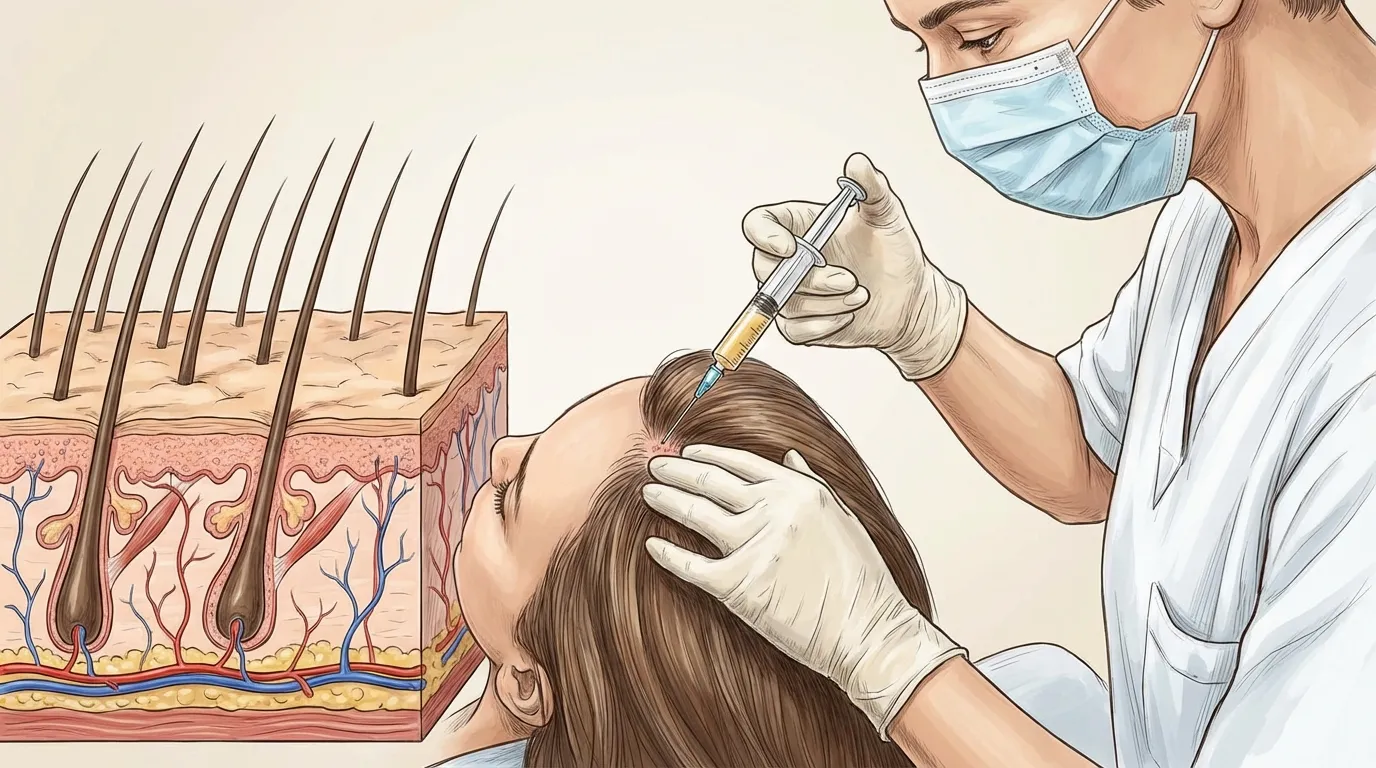
The process itself is fairly simple. PRP therapy starts with a small blood draw, usually from the arm. That blood is placed in a centrifuge, which spins it to separate the platelets from the rest of the blood. Platelets contain growth factors that support tissue repair and cell communication. When these are injected into the scalp, they send those signals straight to areas where hair follicles are weak or thinning. It’s designed to be local, which is a big part of why people choose it.
Research suggests PRP can help hair look thicker and increase the number of hairs actively growing, especially during early or moderate thinning. Results tend to be better when follicles are still alive but struggling. Starting earlier often helps, while completely scarred follicles usually won’t respond. The main point is support, not instant fixes.
PRP can increase the survival of hair follicle cells through anti-apoptotic effects and stimulate hair growth by extending the anagen phase of the hair cycle.
This quote matches how PRP usually works. The goal isn’t fast growth or dramatic changes. It often helps follicles stay healthier and stay in the growth phase longer, and over time, that steady support can really add up.
The Hair Regrowth Mechanism Behind PRP Therapy Explained Simply
To understand how PRP therapy can support hair regrowth, it helps to look at how hair normally behaves over time, even if most people don’t think about it much. Each hair follicle follows a repeating cycle: a phase of active growth, a short resting period, and then shedding before the cycle starts again. This happens quietly all the time. With androgenetic alopecia, that pattern often changes. The growth phase gets shorter, follicles slowly become smaller, and new hair grows back thinner and weaker. It happens gradually, but after a while, it’s noticeable.
PRP therapy is meant to step in before that slowdown becomes too established. One way it works is through growth factors in PRP that send signals helping follicles stay in the growth phase longer, which is usually where the process starts to slip. At the same time, PRP can increase blood flow around the follicles, delivering more oxygen and nutrients that support hair production. It may also reduce programmed cell death in dermal papilla cells, which are directly involved in forming new hair and often don’t get much attention.
Some of the main growth factors involved are PDGF, VEGF, TGF-beta, and EGF. These are not hormones. They are signaling proteins that help guide repair and renewal in the scalp. Their work is mostly behind the scenes.
Studies also suggest PRP may activate stem cells in the follicle bulge area, which is one of the most important regions. These cells help create new hair shafts and support follicles as they move back into active growth after resting. Over time, this process can gently guide the system back toward balance.
When results are tracked, changes aren’t just based on looks. Hair counts and measurements are used too, which makes progress easier to see.
| Outcome | Measured Improvement | Timeframe |
|---|---|---|
| Hair density increase | +25.09 hairs per cm2 | 3 to 6 months |
| Clinical responder rate | 70 to 80 percent | Early to moderate AGA |
| Negative hair pull test | 87.1 percent | Post treatment |
What Clinical Research Says About PRP Therapy Effectiveness
Clinical research usually matters when someone wants solid proof behind a treatment, and that’s often true here. PRP therapy has been explored in randomized controlled trials and meta-analyses, which are seen as strong types of evidence. Much of this research focuses on androgenetic alopecia in both men and women, the most common type of hair loss people talk about, and it’s studied often because changes are easier to measure.
One large review found clear increases in hair density with PRP compared to control treatments. This points to PRP doing more than a placebo or very mild option. The same researchers note that PRP works best when miniaturized follicles are still alive, even if they’re weak, which is common in the earlier stages of hair loss.
PRP significantly improved hair density compared to controls, with a mean difference of 25.09 hairs/cm² (95% CI: 9.03, 41.15; p = 0.002).
Other studies look more closely at PRP used alongside microneedling. By making tiny openings in the scalp, microneedling helps growth factors reach deeper layers. Early results are promising, especially over the short term, although PRP on its own still shows clear, measurable benefits for many people.
Expectations matter. PRP isn’t a cure, and results vary more than many people expect. Because of that, treatment plans often include several sessions spread over months, with follow-ups to help maintain results.
Who Is a Good Candidate and Common Mistakes to Avoid
What often grabs attention first is who PRP actually helps. It tends to work best for people in the early to moderate stages of androgenetic alopecia. That usually means thinning at the crown or along the hairline, or more shedding than normal, like extra strands left in the shower, rather than smooth, fully bald spots. PRP needs existing follicles to work with. When follicles are gone, results usually are too, which keeps expectations realistic.
Timing trips people up more than they expect. Waiting too long is a common mistake, since PRP can’t bring back follicles that have already disappeared, even though many people hope it can. Speed is another issue. Hair grows slowly, so changes often show up around three to six months. It can feel like a patience test, which isn’t always easy.
Results also vary because PRP methods aren’t the same everywhere. Platelet levels and injection technique often affect outcomes more than people think, which explains why clinics see different results under the same name.
From a safety angle, PRP has a solid track record. Since it uses your own blood, allergic reactions are rare. Mild swelling or soreness can happen, but it usually fades quickly, like tenderness around a few injection spots.
All of this helps explain why PRP appeals to people curious about regenerative medicine. In my view, it often attracts long-term thinkers, people who like to understand the biology and are okay tracking slow changes, such as gradual crown thickening over months.
How PRP Therapy Fits Into the Future of Non-Hormonal Hair Regrowth
PRP therapy fits into a bigger shift in how hair loss is being treated, and that shift is often the most interesting part. Instead of relying on hormone suppression, the focus is moving toward follicle regeneration, which feels like a real mindset change. Researchers are spending more time looking at how to wake up dormant stem cells, help follicles stay active longer, and improve signaling in the scalp so growth can restart in a healthier way. For many people, this approach feels more natural and less like forcing the body to do something it doesn’t want to do.
The market data helps show this trend. Regenerative hair loss treatments are growing quickly in the United States, and during consultations, patients are asking better questions than they did in the past. Many are looking for options that support how the body already works, rather than pushing it with aggressive methods. Less force and more cooperation is often the preference now.
PRP also works with newer topical treatments that target follicle stem cells through specific molecular pathways. PRP sends growth factors straight to the scalp, while these topicals focus on removing signals that keep follicles stuck in a resting phase. Different approaches, same goal: helping hair return to its natural growth cycle and stay there, which is often the hardest part.
Practical Takeaways for People Exploring PRP Therapy
PRP often works best as a long-term maintenance option instead of a one-time fix for most people. Results usually appear slowly, which can try your patience, but that pace is normal. A consistent approach, especially when PRP is paired with good scalp care and evidence-backed topical treatments, tends to support better overall results.
So where should someone start? A helpful first step is to look at the current stage of hair loss, since starting earlier often improves the odds. It also helps to ask about the full treatment plan, not just the price. How many sessions are expected, and how is the PRP prepared? Those details often make a difference.
For readers who follow clinical trials and regenerative research, PRP can act as a practical reference point. It relies on natural biology, which is a big part of the appeal for many people.
The Bottom Line on PRP Therapy and Hair Regrowth
PRP therapy works with how hair follicles normally act day to day, which is why it often grabs attention early on. The method looks at growth signals, blood flow, stem cell support, and keeping hair in the growth phase longer, the basics, just done carefully. It’s straightforward biology, explained in plain terms. Research shows clear improvements for many people with early to moderate androgenetic alopecia, which can feel reassuring when the choices seem confusing. What matters is that these results can be measured over time, not just talked about in theory.
Results take patience, usually months, not weeks, and PRP isn’t a cure. Still, it’s non-hormonal, backed by studies, and gives a sense of where regenerative hair treatments are going. For anyone thinking beyond standard medications, knowing how PRP works can help with real decisions, like comparing timelines or tracking steady changes over several months.