Hair loss often shows up first as extra strands in the mirror, usually after a shower. The bigger story, though, often starts deeper in the skin around the scalp’s follicles. By 2026, many doctors and researchers are coming to a similar view: over months and years, scalp health usually sits at the center of lasting regrowth. When inflammation sticks around or blood flow stays limited, even familiar treatments can work poorly. That helps explain why so many hyped fixes don’t live up to the buzz online.
For people with early to moderate androgenetic alopecia, especially those who catch it early, this shift changes how the topic is discussed. Many look for non-hormonal, topical options they can actually stick with long term. Quick results are rare, and most people get that. What they want instead are research-backed ideas that work with the body, not against it. That’s why this article examines why scalp care matters, what current studies are pointing to, and how newer regenerative thinking is reshaping the space. The picture is often broader than expected.
Along the way, you’ll see how the scalp works, some common mistakes people make, and where scalp-first treatments fit today. Newer topical approaches, including platforms like PP405, are also covered so their role stays realistic and grounded.
Why Scalp Health Controls Hair Regrowth
Hair follicles don’t work on their own. They rely on the surrounding scalp to keep things going day after day, even though many people overlook this. Blood flow, immune balance, oil production, and the strength of the skin barrier all matter, just not in the same way or at the same time. When these systems fall out of balance, follicles often begin to shrink and stay in a resting phase longer than they should. This shows up often in androgenetic alopecia. With repeated stress on the scalp, such as ongoing irritation or low‑grade inflammation, the environment becomes less supportive. Over time, follicles save energy instead of growing strong hair, which helps explain why density slowly drops.
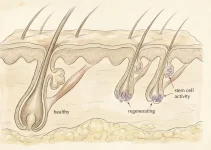
Research often points to clear differences between a healthy scalp and one affected by pattern hair loss. The growth phase, called anagen, tends to get shorter, while the resting phase lasts longer. New hair grows back thinner and breaks more easily, which keeps the cycle going. Scalp biopsy studies back this up, often finding more inflammation and smaller follicles in areas where loss is actively moving forward.
The scalp is an extension of the skin, and inflammation, oxidative stress, and microvascular compromise directly impair follicular stem cell function.
As inflammation increases, stem cells can have a harder time activating when needed. Blood flow also matters; reduced circulation means follicles receive less oxygen over time. In my view, this is why scalp care has shifted from a “nice extra” to a main part of regrowth treatment, especially for people who want steady results over months and years instead of quick cosmetic fixes.
Here is a simple comparison used in clinics.
| Scalp Factor | Healthy Scalp | AGA-Affected Scalp |
|---|---|---|
| Anagen to telogen ratio | About 12:1 | About 5:1 |
| Inflammation level | Low | Elevated |
| Stem cell activity | Stable | Reduced |
This gap helps explain why scalp health often needs attention before visible regrowth feels realistic.
Understanding the Scalp Microenvironment and Scalp Health
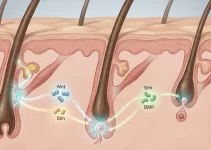
“Microenvironment” sounds technical, but it’s actually pretty simple. It means the small, local world around each hair follicle, more like a neighborhood than an entire planet. This space includes immune cells, nearby blood vessels, nerve signals, and skin microbes, all working close together. When these pieces get along, hair usually follows its normal growth cycle without much trouble. Problems tend to start when that balance slips. Even small changes can throw off the signals follicles depend on. Tiny shifts can lead to bigger effects than most people expect, which is frustrating but very common.
Hair follicle cycling is highly dependent on the surrounding scalp microenvironment, including immune balance and vascular support.
In androgenetic alopecia, this balance often breaks down slowly. DHT plays a role, but ongoing low‑grade inflammation adds extra stress. Many people focus only on hormones and miss what’s happening right at the scalp, and that often leads to incomplete answers. Examining the full microenvironment helps explain why non‑hormonal, topical regrowth options have been getting more attention from dermatologists and researchers. It’s a different way of looking at the problem, and often a helpful one.
Supporting a healthier microenvironment can help regrowth over time:
- Lower inflammation can help follicle stem cells become active again
- Better blood flow improves nutrient delivery, and a stronger skin barrier usually means less irritation
Additionally, this also helps explain why harsh shampoos or aggressive treatments backfire so often. They may remove buildup, but they also disrupt the conditions follicles rely on. Repeated irritation adds up more than people think, and when it does, shedding can stick around and recovery often slows.
Non-Hormonal Topical Treatments and Real Results
When it comes to hair regrowth, topical treatments are usually where people start, and that choice often makes sense. Minoxidil is still the most familiar option, but its limits are well known. It doesn’t calm inflammation or help fix the scalp barrier, so any gains often fade once you stop using it. For many people, results don’t stick. Irritation is another common problem, which makes daily use harder than it sounds, and that frustration can build quickly.
More attention is now going to why some topical treatments work better than others. Recent clinical findings suggest results improve when scalp health is handled first. After 24 weeks, studies report hair density gains of 23 to 38 percent once underlying scalp issues are improved. These changes usually show up as less shedding and hair that feels thicker and stronger, not just a surface effect you notice in the mirror.
| Treatment Focus | Average Density Change | Timeframe |
|---|---|---|
| Standard topical only | +10, 15% | 24 weeks |
| Scalp-first topical approach | +23, 38% | 24 weeks |
Problems often start when active products are used on skin that’s already irritated. Skipping barrier repair while overdoing exfoliation is another common pattern. Too much, too fast. These habits can keep follicles under stress, leading to more shedding and slower regrowth, without people realizing what’s going on.
Newer approaches tend to flip that order. Calming the scalp comes first, with more focus on supporting resting follicle stem cells instead of pushing aggressive growth. Platforms like PP405 follow this shift, especially non-hormonal topical stem cell activation, which many long-term users prefer. It’s quieter and often easier to stick with.
Regenerative Therapies and the Scalp-First Shift
Hair loss care is being rethought as regenerative medicine becomes more common. The biggest change isn’t about forcing hair to grow faster. It’s about fixing scalp conditions that allow growth to happen on their own. This way of thinking already exists in skin and tissue care, so it fits here as well. The approach often feels more supportive than aggressive, and when the scalp is in better shape, growth often follows. For many people, this shift also feels gentler overall.
This scalp-first view shows up in options like PRP, microneedling, and topical signaling molecules that are still being studied, sometimes earlier than marketing suggests. When used together, these methods aim to ease fibrosis, improve blood flow, and protect follicle stem cells so they keep working. Dr. Ralf Paus has pointed out that restoring immune balance around follicles can matter just as much as adding growth signals, and in some cases, it matters more.
Looking toward 2026, a few trends stand out:
- More focus on scalp barrier repair and daily comfort, not just hair density
- Combination strategies that pair scalp care with topical regrowth agents, instead of relying mainly on hormonal suppression
Consequently, results aren’t instant. Regenerative care usually requires patience and steady routines over weeks or months, not days.
Building a Simple Scalp Care Routine That Works
A good routine doesn’t need to be complicated, in my view, and you can usually tell by how long people stick with it. On busy weeks, consistency often matters more than intensity. For early to moderate androgenetic alopecia, a scalp‑first approach usually works better when it focuses on just two core pieces, instead of piling on steps that are hard to keep up with.
What often makes the biggest difference is avoiding irritation. Gentle cleansing comes first: mild shampoos that protect the skin barrier, without daily scrubbing your scalp probably won’t enjoy. Over‑cleansing can strip natural oils and often leads to more sensitivity rather than improvement. Next comes inflammation control. Non‑hormonal topicals can help calm redness and itch while supporting follicles, especially when applied to a clean, dry scalp so irritants aren’t trapped. Small details matter here, at least from what I’ve seen.
Patience also matters, even though it’s not a product. Hair cycles move slowly, so visible changes often take three to six months. Switching products too often can break progress and make it harder to see what’s actually helping.
Here is a simple comparison of routine goals.
| Routine Step | Goal | Common Error |
|---|---|---|
| Cleansing | Protect barrier | Over-washing |
| Topical care | Support follicles | Applying on inflamed skin |
| Timeline | 3, 6 months | Stopping too early |
Platforms like PP405 can be helpful for understanding how newer topical treatments fit into these routines, especially if the goal is to avoid strong hormonal changes and keep things manageable, such as using one supportive topical instead of several overlapping ones.
The Bottom Line on Scalp Care and Hair Regrowth
Hair regrowth in 2026 doesn’t look like it did ten years ago, and honestly, that’s mostly a good thing. The biggest change is moving away from trying to force follicles to grow and instead focusing on creating scalp conditions where growth can come back naturally. That shift makes more sense, especially since clinical research and real patient results across many different groups keep pointing the same way, not just one small slice of people.
If you’re dealing with early to moderate androgenetic alopecia, starting with the scalp often pays off. Why skip the basics? Lowering inflammation, protecting the skin barrier, and supporting healthy blood flow sound simple, but they’re easy to overlook. After that, adding non-hormonal topical regrowth treatments can help, working with your biology instead of fighting it. There’s rarely a shortcut, even when one sounds appealing.
Ultimately, the science is still changing, but the pattern shows up again and again. Long-term regrowth usually follows better scalp health. Care for the base, and real progress becomes possible.