If you’re dealing with early to moderate androgenetic alopecia, the next few years may feel exciting and a little confusing, and that makes sense. New treatments are starting to move past older options like hormones, surgery, and simple camouflage. By 2026, more people will be asking, “Does this work?” along with “What will it cost?” and “Can I actually get it?” When thinking about new advances, it helps to understand hair regrowth therapy cost right from the start, since affordability and access will shape real-world decisions.
For many readers, the biggest concerns come down to hair regrowth therapy cost and treatment accessibility. Those are practical questions. New topical and regenerative options may sound hopeful, but prices can vary quite a bit. Insurance limits, clinic availability, and the amount of research behind each option can also differ from one treatment to another. Some therapies are easy to buy, while others may only be available in certain cities or through clinical trials.
This article explains what to expect in simple terms, without extra fluff. It covers topical therapies like PP405, clinic treatments such as PRP and microneedling, devices, and trial access, along with practical ways to compare value. Readers who keep up with research updates from PP405 can also get a clearer idea of where this kind of non-hormonal treatment may fit into the 2026 hair loss landscape.
Why 2026 Could Change the Hair Loss Treatment Market
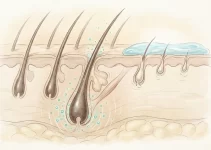
Hair loss treatment seems to be moving into a different phase. Instead of only trying to block hormones or push short-term growth, some newer therapies focus on waking up dormant follicles, which is a pretty big shift. That matters for people with androgenetic alopecia, because many still have follicles. They’re just much smaller. Over time, those follicles shrink and start producing weaker hair.
As UCLA scientist William Lowry explained, “The hair follicle never dies, it just gets smaller and smaller.” That helps explain the growing interest in regenerative and stem-cell-focused treatments. He also called this field “A new class of medicines for hair growth” and said these therapies “can reactivate and invigorate dormant, but not dead, hair follicles,” which gets at the main reason they’re different.
| Therapy type | Typical 2026 access | General cost pattern |
|---|---|---|
| Topical prescription or trial-stage therapy | Medium and growing | Monthly ongoing cost |
| PRP and clinic injections | Limited to clinics | High upfront and repeat sessions |
| Microneedling in clinic or at home | High | Low to medium depending on setting |
| Laser or light devices | Direct-to-consumer | High upfront device purchase |
The table points to something practical: access and cost change by treatment type, not only by brand name. A topical therapy may be easier to use at home. Regenerative procedures, on the other hand, may still rely on specialty clinics and can require repeat visits, which adds more time.
Understanding Hair Regrowth Therapy Cost by Treatment Type
People comparing treatment options often make the same mistake: they only check the starting price, and that never shows the full picture. The real hair regrowth therapy cost includes a few parts: the treatment itself, follow-up visits, maintenance, travel, and time.
Topical non-hormonal therapies
Topical treatments are among the easiest options to use, mainly because people can apply them at home, which is a big plus. In 2026, if newer non-hormonal topicals become commercially available, many experts expect monthly pricing to look similar to other long-term dermatology treatments. That would mean ongoing monthly costs instead of one large upfront payment, and for some people, that is simply easier to budget for.
There is also a real point to keep in mind. Brett King, MD, FISHRS, said, “Patients have to keep taking it. If they don’t keep taking it, the effects of PP405 wear off. So this does seem to be addressing hair loss and helping people maintain their existing hair and regrow some hair. It’s not curing hair loss.”
That makes long-term budgeting part of the decision. What feels affordable for a month can feel very different after a year or two, especially with a treatment that needs to be continued to keep working.
Clinic-based treatments and hair regrowth therapy cost
PRP, exosome-style options, and other regenerative procedures cost more, and that’s pretty clear. They usually involve staff, equipment, and repeat visits. Many clinics also bundle several sessions together, which may look neat on paper. But that simpler pricing can leave you stuck with a plan before you know how well you’ll respond. Understanding hair regrowth therapy cost here means looking beyond the initial package price and considering how often sessions must be repeated.
Devices and hair regrowth therapy cost
Laser caps and similar devices have a bigger one-time cost, and that’s obvious. For some people, that feels simpler than keeping up with monthly bills. But it really only makes sense if the device has good evidence and you’re likely to use it regularly. Moreover, the long-term hair regrowth therapy cost can still rise if replacements or upgrades are needed.
What Treatment Accessibility Really Means in 2026
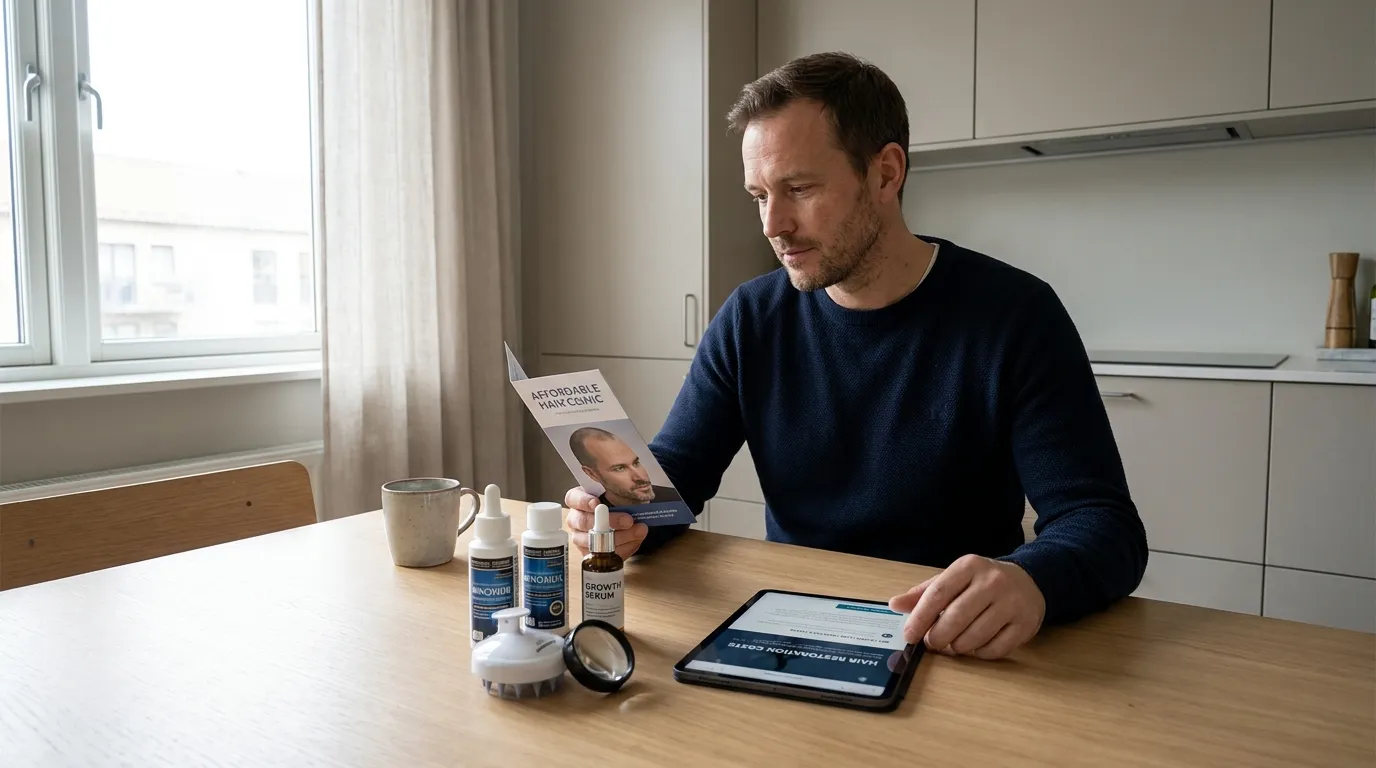
Accessibility is not just about whether a product exists. It also depends on where someone lives, how quickly they can get checked, whether a doctor is willing to prescribe it, and whether they can realistically keep using the treatment over time.
For example, a promising topical may be easier to get than an injection-based therapy because it does not need frequent clinic visits. That difference is real for people in rural areas, for those short on time, and for anyone who would rather avoid the hassle of monthly appointments.
A practical way to think about treatment accessibility starts there:
Step 1: Check the delivery model
Ask if the treatment is home-based, clinic-based, or only available in trials. For most people, home-based options are more convenient and a sensible first check.
Step 2: Look at geography
Some regenerative therapies are mostly offered in bigger cities. If you need to travel, and you might, the real cost can rise fast. It adds up.
Step 3: Ask about follow-up demands
If a therapy needs several appointments each month, keeping up can get hard quickly (and yeah, it adds up). Even if the base price seems fair, that regular commitment still counts.
Step 4: Review eligibility rules
Clinical trials and prescription treatments usually have screening rules, and they matter. Things like hair loss stage, age, medical history, or past treatment use can affect whether someone can get access.
That’s one reason trial-stage treatments get attention from some people. They may let some patients get access earlier, but they can also limit access because only certain people qualify.
The Evidence Gap: Why Some Expensive Treatments May Not Be Worth It
A higher price does not automatically mean better science. In the regenerative hair loss market, bold claims often move much faster than the evidence behind them, and that creates a real problem for buyers. Fancy wording by itself is not proof that a treatment works.
Brett King gave a very direct warning: “These technologies can be sold directly to consumers without large-scale clinical trials, but the fact that they’re on the market doesn’t mean they’re safe or effective.” He was just as blunt about the quality of the research: “A lot of those procedures do not have great evidence. A lot of them are not grounded in clear physiologic principles.”
That is especially relevant for buyers in 2026. Some therapies sound advanced because they use terms like ‘stem cells,’ ‘growth factors,’ or ‘regenerative’ (they’re catchy terms). But the real question is whether the treatment has controlled human data, clear endpoints, and results that can be repeated. If someone is paying more, that is the standard worth checking.
PRP is a useful example. It is widely offered, but the evidence behind it is mixed. As King put it, “PRP is all over the place because the studies are all over the place.” He also noted, “Now, there are some studies where they use PRP in combination with another treatment, such as microneedling, and that seems to show benefits over PRP alone.”
Instead of chasing the newest label, buyers should look at the level of proof that actually exists. How does the treatment work? Does the cost really match the evidence, or just the marketing? In some cases, a lower-cost topical with stronger science may offer better value than a premium clinic package supported by weak data.
Where PP405 and Similar Topicals May Fit
For readers interested in non-hormonal topical options, PP405-style therapies stand out for a different reason: they focus on follicle stem cell biology rather than blocking hormones. UCLA research identified the mitochondrial pyruvate carrier as an important target for waking up dormant follicle stem cells, which puts this approach on a very different path. That research helped build the scientific foundation behind PP405.
William Lowry summed up the idea clearly: “The hair follicle is unique because it can regenerate itself, and by understanding how stem cells in the follicle work, we can discover drugs that reactivate stem cells and restore hair growth.”
If approved products end up being offered as simple topical treatments, that could help treatment accessibility in a pretty practical way. A home-use option is easier to grow than a procedure that depends on trained staff and specialty equipment. Still, easier access does not automatically mean low cost. Even so, it may be easier for more people to start treatment and stick with it over time.
A likely 2026 scenario is that newer topicals land somewhere in the middle of the market. They may cost more than older generic options, while still costing less than repeated in-office regenerative procedures. For many people dealing with early to moderate androgenetic alopecia, that middle ground may feel like a realistic option worth considering.
How to Compare Cost, Convenience, and Long-Term Value
In 2026, choosing a therapy gets easier with a simple decision filter. Focus on value, not hype, so distractions are less likely to pull your attention away.
Ask these five questions
- What is the total 12-month cost? Make sure to include follow-ups, maintenance, and travel, because those costs can add up fast.
- How easy is it to keep using? For a lot of people, daily topical use may be easier to stick with than repeated clinic visits.
- What kind of evidence supports it? Human data is more useful than marketing here, so do not skip it.
- Does it fit your hair loss stage? Early to moderate androgenetic alopecia may respond better than advanced loss.
- Are expectations realistic? Maintenance and gradual improvement are more common than full reversal, and that is good to keep in mind.
| Question | Why it matters | Best sign |
|---|---|---|
| Total yearly cost | Shows real budget impact | Clear price with maintenance included |
| Access model | Affects convenience and consistency | Home use or easy local follow-up |
| Evidence quality | Reduces risk of wasted money | Controlled human studies |
| Fit for your stage | Improves odds of benefit | Designed for early to moderate loss |
Using these questions can help you avoid spending too much on treatments that sound exciting but are hard to access or tough to stick with, which happens a lot.
A Smart Plan for 2026 and Beyond
Hair loss care over the next few years will probably offer more choices, but it will also bring more noise. Some options will look exciting at first. Others may be overpriced or thin on real evidence, even if they’re easy to buy. And a few may have stronger research behind them while still being hard to access because trial enrollment remains limited or product rollouts move slowly.
The smartest move is to stay focused on science, affordability, consistency, and access. Treatments with a clear mechanism and non-hormonal topical approaches aimed at dormant follicles deserve a closer look. It also helps to look past the first payment and figure out the real hair regrowth therapy cost over a full year. At the same time, treatment accessibility should not be treated as a side issue. A treatment only helps if it can actually be obtained, paid for, and used consistently.
Brett King summed up the current situation clearly: “Some of these therapies might work; we’re just still awaiting more studies and patient outcomes.” That’s a good way to look at 2026. It makes sense to stay hopeful, but careful too.
For anyone comparing the next step, it helps to start with hair loss stage, monthly budget, and the level of effort that can realistically be maintained. From there, follow research updates, ask better questions, and choose an option that feels sustainable even when the hype gets louder. That may sound simple, but keeping a consistent, informed approach usually works better than chasing something flashy and expensive.