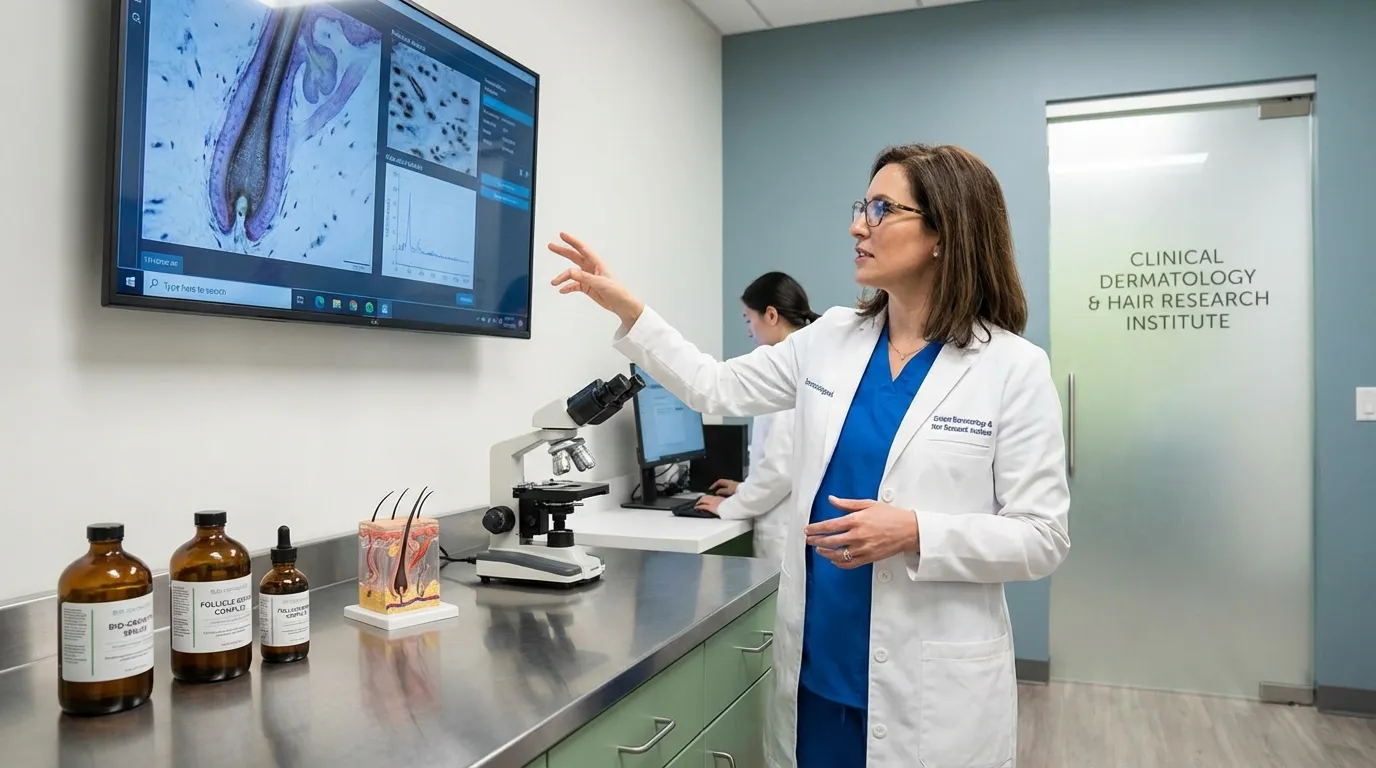
Joining a hair loss clinical trial isn’t a small decision, especially once you see what clinical trial participation really involves, regular visits, check-ins, and a real time commitment. For people in the early to moderate stages of androgenetic alopecia, hair loss can feel deeply personal (yeah, it hits close to home), and many want options beyond the usual treatments. As interest in clinical research is growing, trying new care firsthand can sound appealing. It helps to understand how trials work and whether they match your goals before signing up.
Understanding Androgenetic Alopecia and Emerging Treatment Paths
Androgenetic alopecia, often called male or female pattern hair loss, is a progressive condition shaped by genetics, biology, environment, and lifestyle. In early to moderate stages, hair follicles slowly miniaturize (it’s usually subtle at first). Over time, this shows up as thinner coverage and more visible scalp, especially along the hairline or crown. Treatments have traditionally focused on hormones, but newer research is expanding the view. It now looks beyond hormones to non-hormonal options, including topical formulas and regenerative approaches that aim to keep follicles healthier over time.
These newer therapies often work by restarting follicle activity and improving scalp blood flow and inflammation control through the body’s own repair systems (which sounds complex, but it’s actually pretty practical). People who prefer to avoid systemic or hormone-changing treatments often find these clinical trials appealing, since they act directly on the scalp instead of the whole body. The goal stays familiar: slow shedding, support regrowth, and give follicles better conditions to work, just through a different route.
What Are Hair Loss Clinical Trials?
New hair loss treatments often appear in clinical trials before you can find them anywhere else, which is why these studies draw so much interest. Clinical trials are organized research studies that check how safe a new option is and how well it works in real people, not just in a lab. They also look at practical details that matter day to day, such as side effects, how easy a treatment is to use, and whether results stay steady over time. In hair loss research, this can include topical products, biologically derived compounds, growth factor therapies, stem cell, inspired methods, or device-based regenerative techniques. Many of these approaches are still early and being tested. For a deeper look at the process, you can review the guidelines for participating in clinical trials for hair loss treatments.
Trials run in phases, and each phase has a specific goal. Early phases usually focus on safety and proper dosing. Later phases look at how well the treatment works in larger groups. If a study includes people with early to moderate hair loss, it has already gone through an initial safety review, which can feel reassuring, even though the final results are often still being collected.
Why Consider Clinical Trial Participation?
One of the most appealing parts for many participants is getting access to newer therapies that aren’t available to the public yet. Trying something different can feel hopeful, especially when standard options haven’t been a great fit. This often appeals to people who prefer non-hormonal or topical options that better fit their health views and daily comfort. I think that kind of flexibility matters more than people admit, especially in real-life routines.
Participation also helps move scientific knowledge forward. When you enroll, you help shape future treatment options for androgenetic alopecia. Trials often include detailed scalp imaging and regular check-ins, sometimes every few months, so you can clearly see changes over time, like side-by-side photos that show progress.
Determining Eligibility and Suitability for Clinical Trial Participation
Being okay with some uncertainty is often the real divider. Beyond a simple checklist, personal fit matters. Are you comfortable trying experimental treatments, and can you stick with regular study visits? Time commitment and possible side effects usually shape the experience just as much as the results themselves.
Eligibility rules exist to keep results accurate. Not everyone is a good fit for every trial, and that’s normal. Common factors include age range, type and stage of hair loss, overall health, and past treatments. Some trials ask you to stop current products, while others want people who’ve never tried treatment before. If that sounds like you, great. If not, it’s probably not the right fit.
Non-Hormonal and Topical Focus in Modern Trials
Hair loss research is moving toward non-hormonal, topical options, which often fits how people prefer to handle this problem. The goal is simple: limit whole-body exposure and keep treatment on the scalp, with direct contact at the follicle level where growth often responds best. Current examples include bioactive peptides, plant-based compounds, extracellular vesicle formulas, and topical products meant to gently wake up resting follicles.
In many regenerative-focused trials, researchers look at supporting the hair growth cycle through clearer cell signaling and a healthier follicle environment, like better nutrient flow and cell communication. These options appeal to people wary of long-term hormone changes and who want localized, low-effort routines, such as a once-daily topical. You can explore more in non-hormonal hair loss side effects: what to expect.
What Participation Typically Involves
While every study is different, most hair loss clinical trials follow a similar flow, at least from what I’ve seen. It usually begins with an initial screening visit, which is fairly routine. Researchers go over your medical history, look at your scalp, and take starting measurements like hair density or thickness. It may seem simple, but it helps show exactly where things start instead of guessing later.
After that, things become more hands-on. Once enrolled, participants use the study product or complete the assigned procedure on a set schedule. Follow-up visits happen regularly, since that’s how progress and safety are checked. These visits often include photos, analysis, and questionnaires to track changes or side effects. Honest, specific feedback really helps and can shape how the study moves forward.
Understanding Risks, Benefits, and Expectations
Hair growth moves on a slow clock, so visible changes often take months, sometimes longer than expected. Managing expectations helps in clinical trials where results vary. Some participants see stabilization instead of new growth, which can feel disappointing at first. With conditions like androgenetic alopecia, not losing more hair is still a real win.
Every clinical trial has benefits and risks. Many people like early access to new treatments and closer medical care at visits. Side effects may be unknown, results can be limited or slow, and there are no guarantees.
Informed Consent and Participant Rights
Often, the biggest part is knowing you can say no. Before signing up, participants get an informed consent document that explains the study’s purpose, what will happen, possible risks, and participant rights, all in clear, plain language (no jargon). The goal is simple: be open, and make sure people join by choice, not because they feel pressured (which does happen). Participants can ask questions, get clear answers, and usually leave at any time without penalty.
Balancing Clinical Trial Participation with Personal Hair Care Goals
How a clinical trial fits into everyday hair care usually matters more than people expect. Some studies restrict products or treatments, and that can push a routine off track (often). It’s usually a small change, but I find it helps to imagine how those rules show up day to day before signing up, so surprises don’t stack up later. That’s okay.
For people curious about regenerative therapies, trials can feel like a hands-on way to learn (especially at the start). They often show new science and how long fresh ideas tend to take, including time commitments and check-in visits. To me, those details can matter just as much as possible results, like planning monthly appointments or switching out a favorite shampoo during the study.
Clear expectations early can make trials feel less stressful. Before enrolling, people usually do better when they prepare questions about study length, how often visits happen, possible side effects, even mild ones, and what happens after the trial ends. It also helps to ask about continued access to the treatment and when results are shared. Open, two‑way communication with the research team often builds trust, like knowing exactly who to contact if a side effect shows up between visits.
The Future of Hair Loss Clinical Research
What stands out right now is how much more grounded this wave of research feels. It’s promising, often more than past hype cycles, because clinical trials are showing visible scalp changes over time. Hair loss treatment is changing fast, and that’s a good thing. Regenerative and non-hormonal approaches, long overdue in this field, are gaining traction and steering research in new directions. Progress in cellular biology, biomaterials, targeted topical delivery, and high-resolution imaging is helping researchers examine exactly how and why follicles shrink.
For people with early to moderate androgenetic alopecia, this shift usually means real options. Lab findings are now tied to month-by-month results, with hands-on access, detailed tracking, and regular check-ins with real participants.
Making an Informed and Empowered Choice
Choosing whether to join a hair loss clinical trial is a personal decision, and it often feels more complicated than people expect. Mixing curiosity and hope with realism and self-awareness usually takes time, and that’s normal. What often helps, in my experience, is learning how trials are set up, then exploring non-hormonal research or topical options that fit your goals. You’ll often notice that clarity shows up slowly, not all at once. People join for many different reasons, so you’re not alone. Asking clearer, more specific questions can help connect the dots, like figuring out if a short-term study fits where you are right now.