Hair loss often starts quietly. A wider part. A thinner crown. Small changes you catch in the mirror (or in photos you didn’t take yourself). For many people with early to moderate androgenetic alopecia, the first worry usually isn’t only regrowth. The cost hair loss treatments bring shows up early and tends to stick around. You want something that actually works and something you can afford over time, without stress sneaking into every purchase. That’s often why non-hormonal options start to feel appealing, at least to me. They avoid systemic side effects and keep the focus on the scalp itself, which can feel easier to manage. Even so, pricing can be hard to read. The real cost isn’t always obvious at the start, especially in the first few months.
This guide looks at what you can realistically expect to pay for non-hormonal hair loss treatments. We’ll go over topical products, devices, in-clinic therapies, and newer regenerative approaches getting attention lately (some with more proof than others). Each path comes with very different price points. We’ll also talk about affordability over time, not just the first purchase, since the long view often matters more than people expect. If you’re following research-driven options like PP405 or other topical hair regrowth therapies, cost can shape decisions more than you plan for, sometimes earlier than you think.
Why Non-Hormonal Treatments Appeal to Early Hair Loss Patients
Many people start looking into hair loss treatments soon after learning about side effects linked to hormonal drugs. That concern alone often pushes early-stage patients to search for other options, which makes sense. Non-hormonal treatments work in a different way. Instead of changing hormone levels, they focus on scalp health, calming inflammation around follicles, improving blood flow, and gently helping resting follicles wake up again. Because of this, they often feel like a lower-pressure first step for people with early to moderate androgenetic alopecia, especially when someone is still figuring out a long-term plan. In my view, they’re usually less intimidating and easier to try without making a big mental commitment.
From a cost hair loss treatments perspective, non-hormonal options tend to feel more flexible in everyday life. Many people start with one topical product, adjust later, or slowly build a routine as they learn what actually works for them. Some even stop and start again without needing medical tapering. That freedom is appealing, though costs can quietly rise if no one is keeping track.
The non-hormonal market has grown fast. In 2025, the U.S. hair loss treatment market reached about $4.3 billion, with non-hormonal products taking a bigger share each year. Much of this growth comes from patients who want topical regrowth options backed by clinical research instead of flashy promises, which often helps people feel more confident.
Below is a snapshot of common non-hormonal treatment costs many patients see today.
| Treatment type | Typical cost | What to know |
|---|---|---|
| Topical non-hormonal serums | $25, $80 per month | Peptides and botanicals, often supportive |
| Ketoconazole shampoo | $15, $25 per bottle | Helps scalp inflammation |
| LLLT devices | $200, $800 one time | Higher upfront, low ongoing cost |
| PRP therapy | $500, $2,500 per session | Regenerative, but variable results |
Topical Non-Hormonal Treatments and Monthly Costs for Cost Hair Loss Treatments
What often pulls people toward topical products is how easy they are to use day to day. They don’t require major lifestyle changes, and many feel more comfortable starting here instead of jumping straight into stronger options. For a lot of people, that low barrier matters just as much as the price. When you’re just getting started, it helps that there’s no big commitment right away. Common choices include peptide serums, botanical blends, caffeine-based solutions, and newer formulas based on research that look at how hair follicles respond and communicate, instead of just sitting on the scalp.
When it comes to cost, most non-hormonal topical hair regrowth products fall between $25 and $80 per month. The price usually reflects formulation quality, how well the product reaches the scalp, and whether it’s marketed as a cosmetic or something more research-focused, which often matters more than people expect. Over a full year, that comes out to roughly $300 to $960.
To me, affordability really comes down to consistency. Skipping a few months can lower costs in the short term, but it often lowers results too. Many users quit early and assume nothing is working. In reality, topical treatments usually need six to twelve months of steady use before changes are visible, which can feel slow if you’re checking every day.
This is why newer clinical-stage topicals are getting attention. They’re designed to activate dormant follicle stem cells and improve how the scalp responds, not just coat thinning areas. Pricing is still taking shape, but the goal is fewer products with stronger effects, which could change how people think about cost hair loss treatments overall. For now, treating topicals like skincare, a predictable monthly expense, often makes the most sense.
Device-Based Options: One-Time Cost Versus Long-Term Value
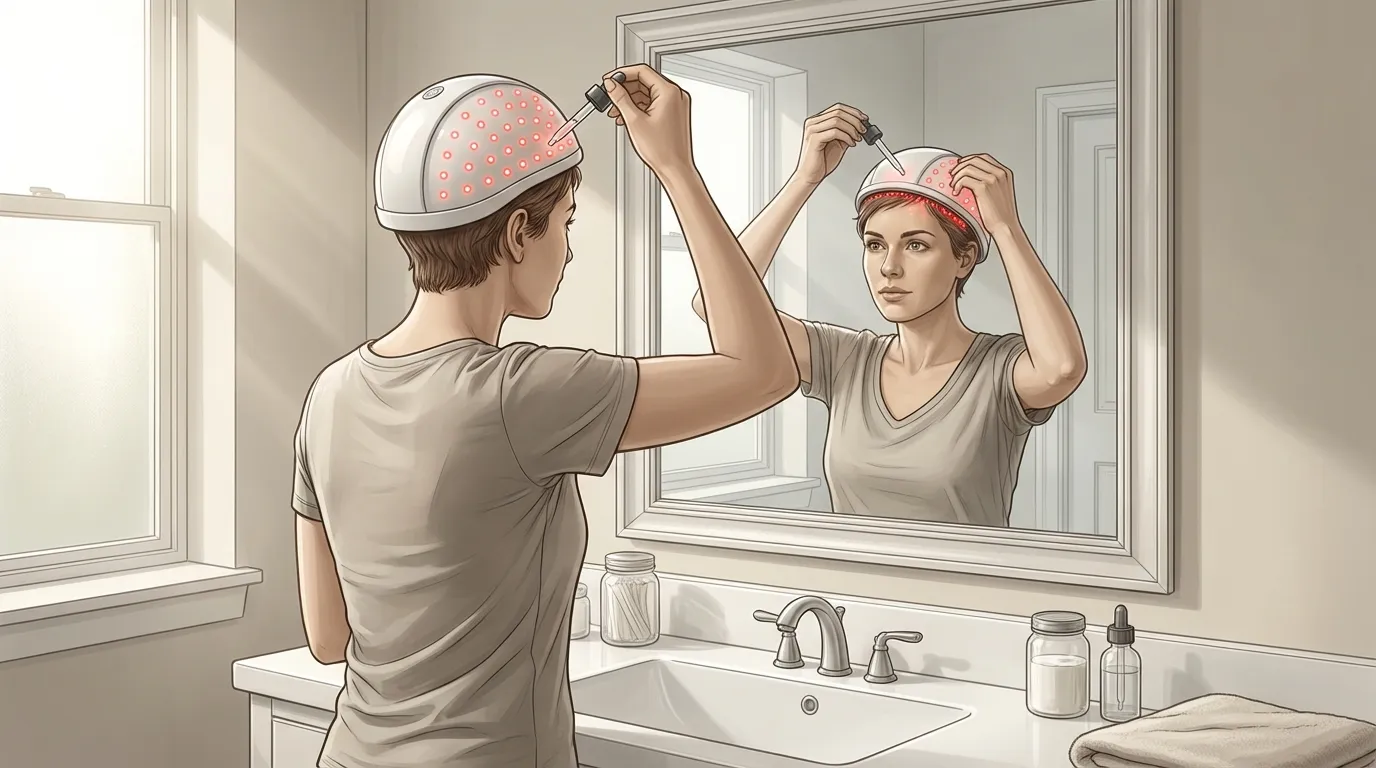
Low-level laser therapy, often called LLLT, sits in a bit of a gray area. It often helps, but the details can feel unclear, which is usually where questions begin. These devices come as caps, helmet-style units, and sometimes a comb. They use red light to stimulate hair follicles and are FDA cleared for home use, which can make people feel more at ease giving them a try.
Prices usually fall between $200 and $800, with higher-end options getting close to $1,000. That upfront cost can feel steep. But since there are no refills or subscriptions, the long-term cost often feels more reasonable. Spread out over three to five years, LLLT is often one of the more affordable non-hormonal options.
Search for: “low level laser therapy hair loss explained”
Find on YouTube →
Consistency is where LLLT really helps. Most people use it three to four times a week, so the main cost is time, not money, a pretty low-key tradeoff. If you stop using it, results usually fade slowly instead of disappearing all at once.
From a cost standpoint, these devices tend to work best for people who stick with a routine and stay patient. Results take time. In my view, for early androgenetic alopecia, they often pair well with topical treatments and help skip another monthly charge.
In-Clinic Regenerative Treatments and Their Real Price Tag
Regenerative options like PRP often sound appealing at first. The idea is pretty straightforward: using parts of your own blood to help wake up hair follicles over time. For many people, that feels reassuring, especially if you prefer working with what your body already has. PRP is non-hormonal, and a lot of people like that. Honestly, it’s a big plus. What usually shows up later, though, is the cost, and that part can catch people off guard.
A single PRP session typically costs $500 to $2,500, depending on the clinic and location. Most clinics suggest three to four sessions in the first year, which puts the total around $1,500 to $3,500, and sometimes more. After that, maintenance sessions are usually needed every six to twelve months. Those ongoing costs are easy to overlook early on, and many people do.
Results can also be all over the place. Healthline’s dermatology reviewers point out that outcomes depend a lot on clinic technique and how each person responds, which makes planning a budget tricky. Some people see visible changes fairly quickly. Others mainly notice slower hair loss, without much regrowth.
Common missteps include starting PRP before hair loss has settled or skipping maintenance sessions to cut costs. From my perspective, that’s often short-term thinking. In both situations, people frequently feel let down by what they paid. PRP usually works better as part of a broader plan, not as a standalone miracle fix, and that’s worth keeping in mind.
Combining Treatments to Improve Cost Efficiency in Cost Hair Loss Treatments
From 2025 to 2026, combination therapy continues as a steady trend. Analysts often point out that pairing microneedling with topical treatments usually leads to better results in this setup. It’s nothing fancy, just a practical pairing that often makes sense when someone spaces treatments over time. The idea is simple, and for many people, including those who prefer slower progress, it generally works.
Cost is a big factor here. At-home microneedling devices usually cost $10 to $50, plus occasional needle replacements that are easy to forget about. Clinical microneedling costs more, typically $200 to $400 per session. When either option is used with topicals, some users can often wait longer before moving straight to PRP, which is usually considered later when progress slows, and that timing often matters more than people expect.
Rather than putting everything into one expensive option (often the riskiest choice), combination approaches spread costs across methods. Support builds gradually, step by step. Research-focused topicals that activate follicle pathways can improve this approach, so fewer add-ons may be needed. For example, stronger topical support alongside microneedling can help someone stay steady before PRP becomes necessary.
Planning Your Budget With Research in Mind
For many people dealing with early to moderate androgenetic alopecia, a realistic yearly budget usually looks like this, with few surprises. Depending on what someone sticks with, topicals and devices often land between $300 and $1,200 per year. The bigger jump comes with regenerative treatments, where first‑year costs can reach $1,500 to $4,000 or more, and it adds up quickly. These aren’t small numbers, and I think it’s worth thinking about them before starting.
Because these options are labeled cosmetic, insurance generally doesn’t help. That’s why planning ahead matters. Long‑term consistency often counts more than stretching for something once and then dropping it, which happens a lot.
Keeping up with clinical research can help too. Options like PP405 aim to improve results without extra hassle in most cases. If they work as hoped, routines may shift toward fewer, stronger products, with less day‑to‑day juggling.
The Bottom Line on Cost and Choice
A fast‑filling calendar is often the first surprise with clinic treatments, and it affects both cost and commitment. Non‑hormonal hair loss options still offer real choices for people who want safety and some control, backed by research (helpful if you like receipts). Affordability usually comes down to time, not just the sticker price. Monthly products can quietly add up over a year, which many people miss. Devices cost more at the start but can save money later. A helpful approach is to start with a plan and look at yearly cost instead of impulse buys (I think this helps avoid regret), then act early, when simpler treatments often work best, and review options as trials and regenerative advances change the picture.