Hair loss treatment can feel personal and, for many people, unexpectedly frustrating, especially when it starts earlier than they thought it would.
For those dealing with early to moderate androgenetic alopecia, treatments that avoid hormonal pathways are often appealing, since hormonal approaches can sometimes bring unwanted side effects.
Interest in non-hormonal options has been growing as regenerative medicine advances and new topical agents enter clinical trials. Some treatments are already well known, while others still sit in the “early evidence, needs more data” stage.
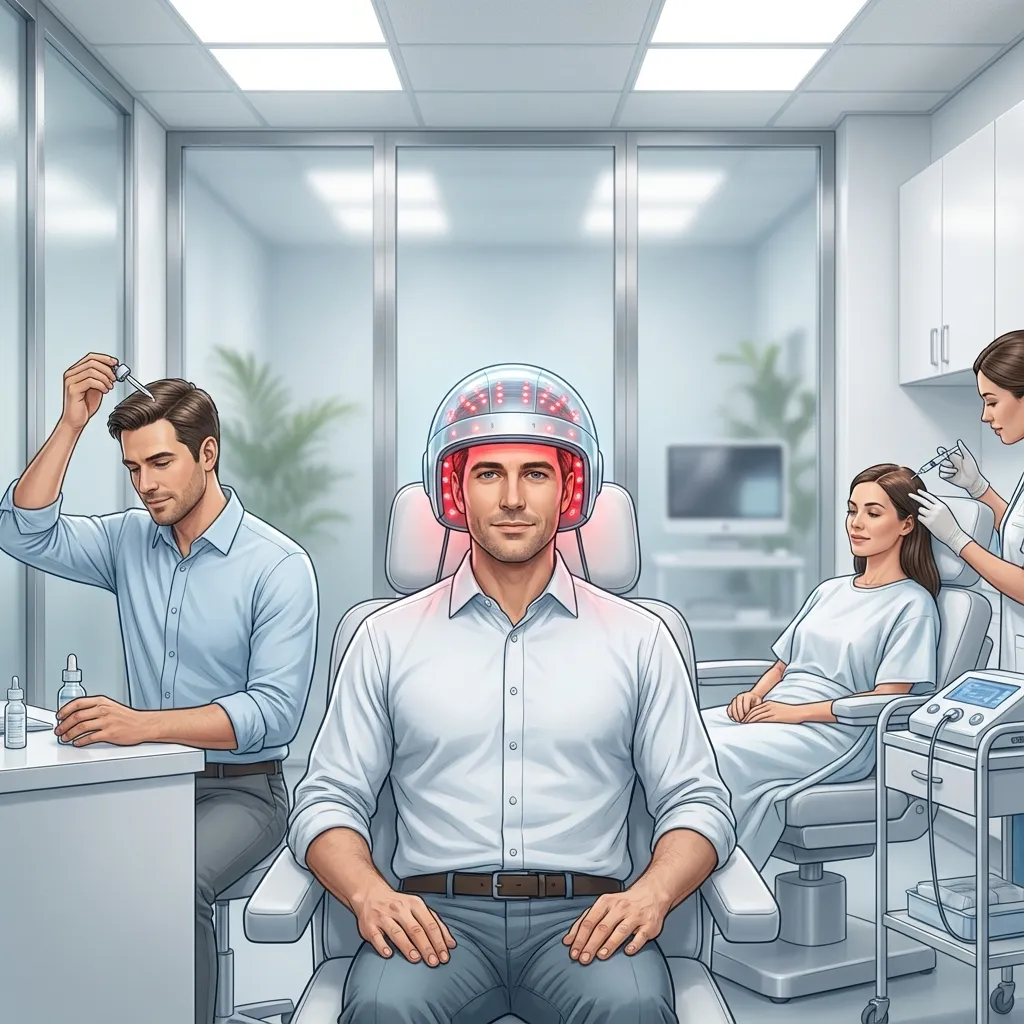
Non-Hormonal Hair Loss Treatment
There are several options worth exploring, from established treatments like minoxidil, low-level laser therapy, and platelet-rich plasma to newer regenerative methods such as adipose-derived stem cell therapy.
A newer compound, PP405, has also gained attention in recent studies. By combining practical results with expert insight, the goal is to help identify which choice best matches your needs and comfort.
Understanding Non-Hormonal Hair Loss Treatment
Non-hormonal treatments address hair loss without affecting androgen levels, an advantage for those concerned about side effects from drugs like finasteride.
Instead of changing hormone activity, they aim to wake up inactive follicles, improve scalp blood flow, and sometimes help repair follicle cells.
Because they don’t impact the body’s wider hormonal system, they’re often seen as safer, especially for people with certain health conditions or for anyone hesitant to use hormone-based medication long term.
Minoxidil is one of the most familiar topical options. By boosting blood flow to follicles, it can trigger new hair growth.
According to Chemist-4-U Hair Loss Statistics 2025, 5% topical minoxidil reduced hair loss in 62% of men within a year, with about 35% showing visible regrowth, most notably on the crown and vertex, which tend to respond best to its vasodilator effect.
Women often choose the 2% version, which offers similar results but with a slightly lower chance of scalp irritation, helpful for those with more sensitive skin.
Low-level laser therapy (LLLT) takes a different approach, using focused light energy to stimulate follicle activity. It’s pain-free and generally well tolerated, even for people prone to irritation.
Devices range from handheld combs to helmet-style systems that cover the whole scalp in light. Using them regularly, several times a week, can help keep follicles in active growth mode.
Research shows LLLT can improve hair density by around 15–20% within a few months when used consistently, which many find motivating.
| Treatment | Mechanism | Effectiveness | Safety Profile | Ideal Candidates |
|---|---|---|---|---|
| Minoxidil (Topical) | Vasodilator, increases follicle blood flow | 62% reduced loss; ~35% regrowth | Mild irritation possible | Early to moderate AGA |
| LLLT | Photobiomodulation stimulates follicles | Moderate density increase | Very safe, minimal discomfort | Early AGA, sensitive scalps |
| PRP | Platelet growth factors | High density gains | Mild soreness post-procedure | Early-mid AGA |
| ADSVF Stem Cell Therapy | Regenerative stimulation | 93% anagen increase | Low adverse events | Progressive AGA |
| AMP-303 / PP405 | Novel topical small molecules | Early clinical promise | Safety under review | Experimental candidates |
| VDPHL01 | Non-hormonal oral drug | Ongoing Phase 2/3 | Awaiting data | Men & women avoiding hormones |
While each treatment works in its own way, the table explains their methods clearly.
For early thinning, topical or device-based options often bring the best results. In more advanced cases, treatments that rebuild and strengthen follicle health may offer a better chance for lasting improvement.
Finasteride can cause side effects like mood changes or sexual dysfunction, which are possible but not common. The best way to use finasteride is with proper medical discussion and monitoring so decisions feel informed and comfortable.
Regenerative Medicine Approaches in Non-Hormonal Hair Loss Treatments
Adipose-derived stem cell therapy (ADSVF) is becoming a promising non-hormonal option for hair restoration. In a 2025 study by Kaewmungkun et al., participants saw a 93.4% increase in anagen-phase follicles along with a 35.6% drop in telogen-phase follicles over six months (Source).
This means more follicles were actively growing hair while fewer stayed inactive. The process uses a small amount of fat tissue, usually from the abdomen or thigh, where stem cells are separated and injected into the scalp.
These cells release growth factors and cytokines that can restart follicles that had stopped working.
By delivering these regenerative cells and signals directly to thinning spots, stem cell therapy can help dormant follicles become active again. Results differ from person to person: some keep thicker hair for years, while others see gradual changes over several months.
Side effects tend to be minor, such as brief scalp tenderness or swelling. Because the cells come from the patient, the chance of immune rejection is very low. Improvements usually build over time rather than happening right away, so patience is important.
PRP (platelet-rich plasma) therapy is another regenerative option. It begins with a simple blood draw, followed by concentrating the platelets and injecting them into thinning areas.
Platelets release growth factors like PDGF and VEGF, which support new blood vessel growth and maintain follicle health. Using PRP alongside low-level laser therapy (LLLT) or topical minoxidil can improve results.
Initial sessions are often monthly, then spaced out for maintenance. Some studies show up to 30% more hair density in certain groups, making PRP a useful part of ongoing hair restoration plans.
Established Non-Hormonal Hair Loss Treatment Options
Minoxidil is still the most commonly used topical for hair loss, FDA-approved, easy to buy in most pharmacies, and generally affordable.
Many people notice visible improvement after several months, but stopping treatment often leads to shedding again.
Because it’s inexpensive and widely available, it’s often a practical first choice, though applying it twice a day can feel repetitive, especially for those who find it hard to stick to routines.
Low-level laser therapy (LLLT) devices, ranging from combs and helmet systems to newer cap designs, provide a non-drug way to help support hair thickness.
They’re considered safe for long-term use, and many users pair them with other treatments to improve results.
Being able to use them at home, whether while watching TV or scrolling on a phone, adds to their convenience.
Research shows that consistent use can slow thinning and help keep existing strands stronger.
These options tend to work best in the earlier stages of androgenetic alopecia, when follicles are still active.
Once follicles have shrunk heavily or stopped working, stimulation alone is unlikely to bring back growth, so starting early can make a difference in long-term appearance.
Emerging Non-Hormonal Hair Loss Treatment and Clinical Trials
Several new non-hormonal treatments are steadily moving through development, each taking a different approach to hair follicle regeneration.
One gaining attention, PP405, aims at dormant hair follicle stem cells by blocking MPC (mitochondrial pyruvate carrier) activity, essentially trying to restart natural growth cycles.
Early trial results look promising, though small-scale studies can seem positive before larger trials give a clearer picture.
In initial data, better follicle cycling was seen in about 12 weeks, which is fairly quick, but researchers emphasize that longer, more thorough trials are needed to understand its lasting effects.
AMP-303 and VDPHL01 are also making progress.
VDPHL01, an oral treatment now in Phase 2/3 trials for men and women with pattern hair loss, works through a pathway unrelated to androgen suppression, useful for those who have had side effects from finasteride or dutasteride.
If cleared, it could become the first widely available oral non-hormonal choice.
On the business side, investment is growing in Pelage Pharmaceuticals, Veradermics, and smaller biotech companies.
This funding, along with partnerships between dermatology clinics, research labs, and biotech developers, is speeding up the move from lab research to real-world treatments.
Readers can follow updates directly on our homepage.
Combination Therapy Strategies in Non-Hormonal Hair Loss Treatments
Using more than one non-hormonal treatment together can often bring better results.
For example, pairing minoxidil with low-level laser therapy (LLLT) can work well, minoxidil boosts blood flow to hair follicles, while laser light directly stimulates the cells, creating effects that support new growth.
Adding PRP to a stem cell plan may also speed up visible progress, so results can appear sooner than with either treatment alone.
What if your treatment could be customized before starting? Genetic profiling now makes this possible, showing which therapies match your follicle patterns and scalp condition.
Certain markers can indicate whether minoxidil is likely to work, helping doctors choose options with greater potential instead of relying only on trial-and-error.
Many plans also include lifestyle changes, nutrient-rich diets, targeted supplements, and stress control, to help strengthen the scalp.
This approach often involves a team: dermatologists, trichologists, and regenerative specialists working together to address stubborn or widespread hair loss more effectively.
To explore personalized treatment plans, visit our contact page.
Your Path Forward
If you’re in the early or middle stages of androgenetic alopecia, non-hormonal options can be a practical and lower-risk choice.
Minoxidil and low-level laser therapy (LLLT) are two of the most available and widely trusted treatments, both easy to get and familiar to many patients.
At the same time, regenerative methods like ADSVF stem cell therapy are moving into more advanced use, and starting them sooner can give a better chance of keeping active follicles before they stop working completely.
A new hair loss treatment is appearing, with PP405 showing promise as a topical supported by recent studies.
Keeping an eye on clinical trial updates is wise, as they’re often the first sign that a new therapy is getting closer to public release, even though progress in this area can be slow.
A good step is to work with a dermatologist who knows both standard and experimental options.
Ask whether they discuss side effects clearly, fit treatments to your level of commitment, and use tools like scalp imaging or hair density mapping.
In some cases, blood tests are needed to find contributing factors.
Combining proven therapies with personal lifestyle changes and regular check-ins can help many people keep, or even improve, hair health without using hormonal treatments, making visible results more likely.


No Responses