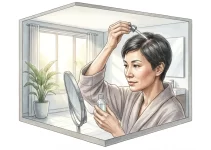
Hair loss often begins quietly. A wider part, a thinner crown, or more hair in the drain, usually noticed when your mind is on something else. For many people with early to moderate androgenetic alopecia, these small changes raise real questions. Acting early feels like a smart move, but only if the options feel safe and proven. That’s why people often compare a few paths at once, searching for choices that fit their needs instead of whatever is loudest online. Hormonal drugs don’t work for everyone, and that concern makes sense. Interest in stem cell hair regrowth has grown from this place. The changes can be easy to overlook until they’re not, and questions about timing usually come first, followed by questions about what actually helps.
Research into stem cells has changed how scientists look at hair loss. Instead of forcing growth, these treatments try to wake follicles that are still alive but resting, which happens more often than many people realize. This article looks at current research, what seems to work so far in most cases, and where things may be going. It stays focused on non-hormonal, mostly topical options, with the science explained in a clear, realistic way so readers can decide what’s worth their attention, and what likely isn’t.
How Stem Cells Relate to Hair Growth and Stem Cell Hair Regrowth
What surprises many people is that, in most cases of androgenetic alopecia, the hair follicles are still alive. They’re usually not gone, they’re just stuck in a long resting phase and aren’t very active. Each follicle has stem cells that normally help guide the hair growth cycle over time. With pattern hair loss, those cells often stop getting the right signals. When that happens, the growth phase gets shorter, and new hair grows back thinner than before. That’s why changes tend to happen slowly and quietly instead of showing up as sudden heavy shedding.
One part that really matters is understanding what stem cells actually do. Research so far shows they mostly help by sending signals rather than building new structures. They release growth factors that support existing follicles and help keep them in the anagen, or growth, phase longer. They don’t usually form brand-new follicles, which often gets glossed over by clinics, in my view, even though it affects expectations.
While stem cells exist in various tissues, including adipose tissue, they do not directly enlarge hair follicles. Instead, they work through a paracrine effect, releasing factors that may prolong the growth phase and prevent follicles from entering a regression state. Stem cell therapy does not reverse miniaturization but rather delays it.
Because follicles are still there early on, stem cell, based regrowth tends to work best at that stage. Once follicles are truly gone, there’s simply less for any treatment to work with. Over the past decade, research has looked at different ways to deliver these signals, from cell-based extracts to newer topical methods aimed at activating follicle stem cells. The approach has changed over time, and it’s still evolving.
What Human Clinical Studies Show So Far
What makes stem cell treatments stand out among hair loss trends is that they usually come with real human data, not just theories. That matters here because several controlled studies help set realistic expectations and show what’s often possible in real-world use, not only what sounds good on paper (which happens a lot in this space).
Two approaches show up most often in the research. One uses autologous micrografts, where small samples are taken from your own scalp, processed in a lab, and placed back into thinning areas. It’s fairly simple and uses your own tissue. Another approach looks at dermal sheath cup cells, which are closely linked to follicle health and normal growth cycles, with the aim of supporting hair that’s already weakening.
Here is a snapshot of key human study outcomes.
| Approach | Measured Outcome | Timeframe |
|---|---|---|
| Autologous micrografts | ~29% increase in hair density | 23 weeks |
| Dermal sheath cup cells | Higher density and thicker hair | 6, 9 months |
| ADSC-conditioned media | Improved density and anagen rate | 6 months |
| PP405 topical | 31% reached ≥20% density gain | Phase 2a |
These numbers matter because they come from real people, not lab dishes. Results still vary, and gains are usually modest, but they’re often noticeable in strand thickness or day-to-day shedding, especially when treatment starts early, which often helps.
We have shown that the isolated cells are capable to improve the hair density in patients affected by androgenetic alopecia (AGA).
It also helps to look at what didn’t happen. None of these studies reversed advanced baldness or brought back very dense hair. Many did show thicker strands, better strength, and slower loss over time, which is still meaningful progress to many people.
Injection-Based vs Topical Stem Cell Approaches
Early stem cell treatments leaned mostly on injections. They usually used fat-derived stem cells, mixed with scalp micrografts and cell-conditioned media (a pretty complex blend, honestly). Some results did look promising, at least to me, but the downsides were hard to miss. Costs were often high, and treatment plans varied a lot. That made repeat injections a tough choice for many people, especially when plans stretched over months or even years.
That kind of pressure often pushed research toward topical options. Instead of adding new cells to the scalp, researchers started focusing on waking up the stem cells already there. It’s a different way of thinking, but often a more workable one. These methods use small molecules or stem-cell-derived signals that can get through the skin barrier, which isn’t easy. That change tends to matter more than it sounds at first.
PP405 is a well-known example. It’s a non-hormonal topical compound aimed at dormant follicle stem cells. It works by blocking a pathway that keeps follicles in a resting state. It’s a simple idea, in my view, and it usually fits early to moderate hair loss rather than advanced cases.
To see how these approaches differ, here’s a straightforward comparison.
| Feature | Injection-Based | Topical Activation |
|---|---|---|
| Invasiveness | Requires injections | Applied to scalp |
| Cost range | $3,000, $25,000 | Expected lower |
| Target | Added cells or signals | Existing follicle stem cells |
| Hormonal involvement | None | None |
Safety, Regulation, and Common Mistakes
When people talk about stem cell hair regrowth, safety usually comes up first. As of 2026, there still aren’t any FDA‑approved stem cell treatments for hair loss in the United States. That can sound worrying, but it doesn’t automatically mean the science is weak. Often, regulators want longer studies and steadier results before approval. That kind of caution makes sense here.
What’s often more concerning is how some clinics sell these treatments. You’ll see promises of guaranteed results or claims that one session will fix everything. Why is that an issue? Hair loss is usually complex, and real progress often takes months or longer, not a few weeks.
Common mistakes to avoid include:
- Waiting until follicles are already gone, which limits what treatment can do
- Paying high fees for protocols that are vague or poorly explained
- Mixing up PRP with true stem cell therapy (they aren’t the same)
- Skipping maintenance or follow‑up care when it’s recommended
It is our hope that these stem cells could one day provide a novel therapy for treating hair loss in people.
That word “hope” comes up a lot for a reason. Research does look promising and often improves each year, but this area is still growing. For now, the safest way to access advanced options is usually through well‑run clinical trials with proper oversight, not flashy marketing claims.
Where the Research Is Heading Next
What’s getting the most attention right now isn’t the stem cells themselves, but the quiet signals they give off. Researchers are starting to look more closely at secretomes and exosome-based messengers, the subtle cues that guide how hair follicles respond over time. The focus is shifting away from moving cells and toward using what those cells release, which often makes testing easier and results more consistent.
You can see this change clearly in topical treatments. Because they’re easier to scale and face fewer regulatory limits, they tend to fit better into long-term use. For many people, that matters more than a single procedure. PP405 comes up often for this reason, especially since it avoids hormones entirely. That choice helps ease common concerns and keeps treatment plans simpler for most users.
Combination therapy is also becoming more common. A practical option is pairing topical activators with microneedling or low-level light therapy, depending on the person. The goal isn’t a fast makeover. Slow, steady progress and better consistency usually matter more, as seen in the early, regulated rollout already happening in Japan, which is shaping real-world expectations.
Practical Takeaways for People With Early Hair Loss
When something sounds like a miracle fix, a little doubt is usually healthy, and early hair loss is no different. If thinning has started but you still have visible coverage, stem cell, based research can matter, sometimes more than people expect at this point. Timing often affects how hair changes show up, and keeping expectations realistic usually makes the process feel less stressful.
So what actually helps right now? A smart move is focusing on treatments that support the follicles you already have, especially near the hairline or crown. Concerned about side effects? Non-hormonal options often feel like a safer place to start. It also helps to follow clinical trial updates, even if they seem repetitive at first. Patterns do show up over time.
For topical stem cell activation and PP405 trial progress, https://pp405info.com/ is worth checking. It’s known for sharing educational updates without pushing products, which keeps things clear. Costs and access should get better as topical options move ahead. Until then, staying informed gives people more control, like knowing which option works best for them right now.
The Bottom Line on Stem Cell Hair Regrowth
What’s most interesting right now is that stem cell hair regrowth has moved out of the science‑fiction zone. Research increasingly shows measurable benefits for people with early to moderate androgenetic alopecia, which is usually when thinning first becomes noticeable. The results aren’t magic, and that distinction matters. These treatments don’t create brand‑new follicles. Instead, they strengthen and protect the follicles you already have, which often leads to visible changes over time. Progress is usually slow and gradual, but it can be noticeable if someone is paying attention, like checking the mirror every few weeks.
Injection‑based therapies helped move the field forward, but attention is now shifting toward topical options. That shift matters because non‑hormonal compounds that activate follicle stem cells are easier to fit into daily routines, without hurdles like appointments or needles. Consistency often decides results. Ongoing clinical trials, including those around PP405, explain why this area keeps drawing interest.
For people early in hair loss, it’s often worth watching how fast this space changes. Following the research and tracking trial updates can help. Hair regrowth is moving away from hormone battles and toward supporting natural biology, and that often shows up as small, steady changes over time.