Hair loss can feel overwhelming, honestly. New treatment headlines seem to appear everywhere, often right when someone is scrolling late at night. Phrases like “clinical trial results” or “Phase 2a” get tossed around with very little explanation. That’s why it usually helps to pause and ask what any of this actually means for your hair right now, not years from now when things could look very different.
For people dealing with early to moderate androgenetic alopecia, the search often focuses on treatments that feel safe and actually work. In many cases, there’s also a clear preference for options that don’t mess with hormones, which matters more than bold marketing claims. That’s part of why newer topical treatments, including PP405, are getting more attention lately. That growing interest is worth watching, even if a bit of skepticism still makes sense.
The most helpful part is learning how to understand clinical trial results without a science background. This guide explains how trials are set up, what results can and can’t show, why PP405 gets noticed, and where the real limits are. It also walks through how to read basic data, spot common warning signs, and see how this research might shape future hair regrowth options, often slowly, but in ways that can still add up over time.
What Clinical Trial Results Really Tell Us
Clinical trial results come from carefully collected data involving real people, not lab-only tests, which usually makes them more useful for understanding what might happen in the real world. These studies run under strict rules with constant oversight (lots of checklists, honestly), so safety and effectiveness are tracked step by step. That’s why these results often carry more weight than early lab findings, and why you can usually trust where the numbers come from, even if they don’t tell the full story yet.
Hair loss treatments usually move through several phases, and each one does something different, even when the names feel confusing at first. Early phases focus mostly on safety and catching obvious problems. Later phases spend months measuring how well a treatment works, which can test everyone’s patience. When reading results, the trial phase helps explain what’s being claimed, and what isn’t.
Take a Phase 2a trial. It usually asks a narrow but meaningful question: does the treatment show early signs of working, and does it still look safe enough to keep going? It’s a first real checkpoint, not a final answer, more a sign of what might come next.
In hair loss research, results often track hair density, thickness, scalp health, and biological markers inside the scalp. These measurements help researchers spot changes before visible regrowth shows up, which often comes later. Slow progress first, in most cases.
Here’s a snapshot of the verified PP405 clinical trial results that many people are talking about. A quick look, but there’s a lot to unpack (you’ll see why):
| Metric | Result | Details |
|---|---|---|
| Trial phase | Phase 2a | Randomized and placebo controlled |
| Participants | 60, 78 adults | Androgenetic alopecia |
| Hair density response | 31% | Over 20% increase |
| Placebo response | 0% | No similar increase |
| Safety | Well tolerated | No systemic absorption |
For a deeper dive into similar non-hormonal approaches, see Non-Hormonal Hair Loss Treatments: Stem Cells vs. Fatty Acids, which compares mechanisms and expected outcomes.
Why PP405 Is Different From Traditional Hair Loss Treatments
Most common hair loss treatments follow pretty similar paths. Minoxidil mainly works by improving blood flow to the scalp, usually focusing on the crown or hairline. Finasteride takes a different route by changing hormone levels, which helps some people but not everyone. Both can be useful in certain cases, but their limits often show up over time, especially after years of use. Side effects are also common, so for many people it never feels like a perfect solution.
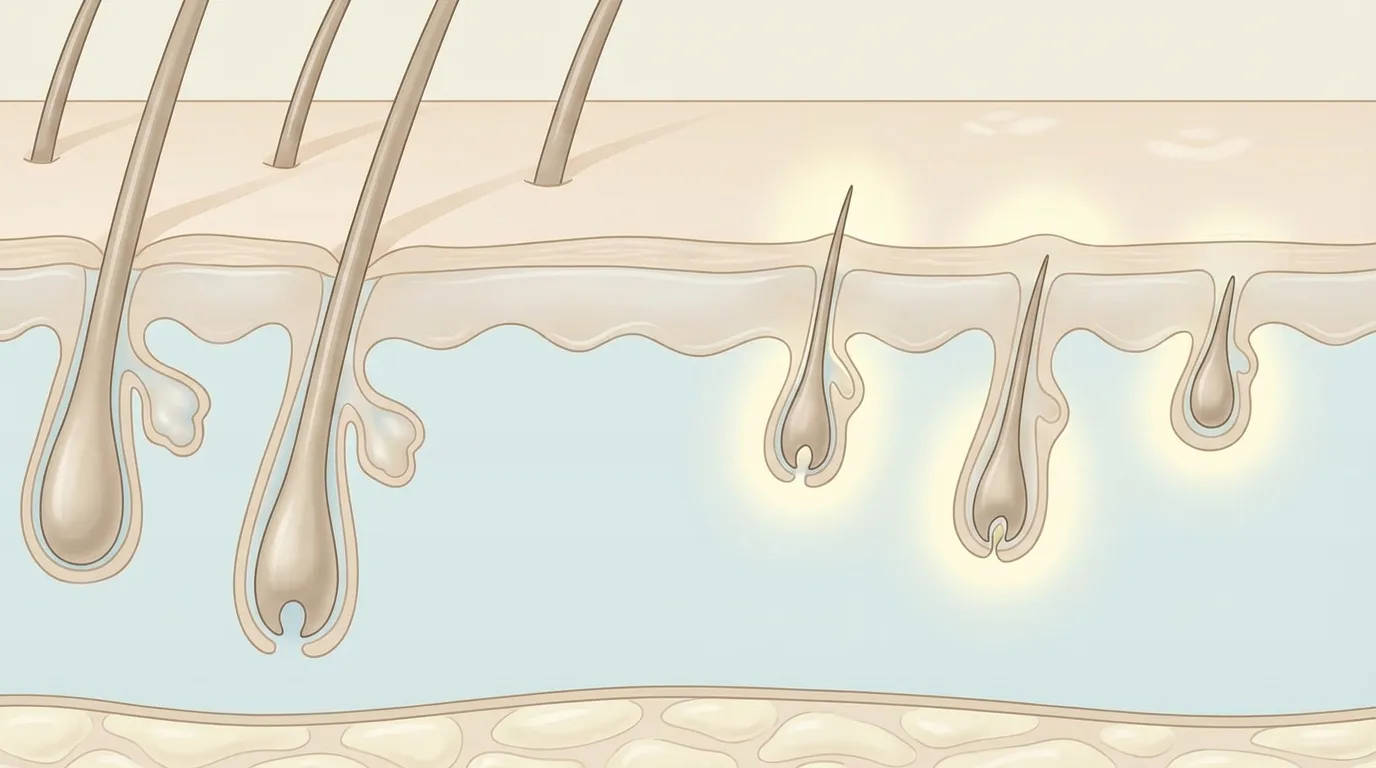
PP405 is being studied as a non-hormonal, topical hair regrowth treatment, and that’s where it starts to feel different. Instead of focusing on blood flow or hormones, the idea is to wake up dormant hair follicle stem cells. In early to moderate hair loss, these cells often still exist in thinning areas, which surprises a lot of people. They’re not gone. They’re just inactive, and often stubborn.
By looking at why follicles stopped producing strong hair in the first place, this approach goes beyond simply slowing loss. Researchers often describe this as a meaningful shift in how regrowth is being explored, and many see it as a smarter angle.
According to Daniel Gil, Ph.D., this stem cell focus is central to PP405’s design:
The translational data derived from our ex vivo studies on human facelift skin have been further validated in a Phase 1 first-in-human clinical trial demonstrating PP405 effectively reactivates dormant hair follicle stem cells.
Dormant follicles are still alive, and that changes the conversation. If they can be reactivated, regrowth may happen without changing hormone levels, which matters a lot for long-term use. For many people, that alone makes this approach feel different. There’s also more detail available on non-hormonal options, including how topical delivery and stem cell signaling work, with clear examples that help show how this could fit into real treatment plans.
How to Read Hair Loss Trial Results Without the Hype
Big percentages and bold headlines are exciting (we all fall for it), especially when a few weeks are promised to change everything. Learning how to read trial data helps keep expectations grounded and can save a lot of frustration later, which people usually appreciate once the early buzz wears off.
What often makes the biggest difference is the study design. Trials that include a placebo group and some level of blinding usually give steadier, more believable results. These details matter more than they sound because they cut down on bias and wishful thinking, something researchers can still slip into. They seem minor, but they can shape the outcome in a major way.
Who took part in the study also matters. Look at the stage of hair loss. Early to moderate androgenetic alopecia often responds better than advanced loss. Thinning hair may bounce back, but smooth bald areas usually do not, since scarred follicles limit what’s possible.
Timing is another piece of the puzzle. Most treatments take months before changes are visible. PP405 showed early biological activity within weeks, which is unusual, but visible regrowth usually needs longer, careful follow-up.
A simple way to think about the data:
- Early biological signals show something measurable is happening
- Density changes point to real growth potential, not just lab numbers
- Longer trials help show whether results last beyond six months
- Safety data quietly shows side effects and how well people tolerate treatment
If joining a study sounds appealing, this article on clinical trial participation guidelines explains what volunteers can expect in clear, skimmable terms.
Watching an expert explain a real chart, like why a placebo line stays flat while another slowly rises, often makes trial results feel much less intimidating next time.
Safety, Side Effects, and What Trials Look For
In hair loss studies, safety usually comes first, mainly because the scalp can be sensitive and react quickly. The first things people notice are often visible problems like redness or itching. At the same time, researchers also watch blood tests to check whether a topical drug is moving past the scalp when it shouldn’t.
That’s why non-hormonal topical options often get interest. A lot of people worry about hormone-related side effects, which makes sense. In PP405 trials, researchers reported good tolerability and didn’t find systemic exposure, meaning the treatment stayed where it was applied. That’s reassuring for now, even if it’s not the final word.
Early trials are usually small on purpose. Uncommon side effects often show up later, usually in Phase 3 studies with much larger groups, so research teams move carefully instead of rushing ahead.
Dr. Qing Yu Christina Weng, M.D., explained the bigger goal behind this line of research:
We are incredibly excited about this data, and PP405 offers an opportunity to change the landscape of alopecia treatment through directly targeting hair follicle stem cells at the source through a clear mechanistic pathway.
If side effects are a main concern, this breakdown may help: side effects of non-hormonal hair loss treatments. It covers what’s known so far, like mild scalp irritation, and points to open questions researchers are still studying, such as what happens after months of daily use.
What Clinical Trial Results Mean for the Future of Hair Regrowth
Clinical trial results give a pretty clear idea of where the industry is going, and the direction is interesting. Hair loss research is now leaning more toward regenerative medicine than it did years ago. Instead of just trying to keep the hair people already have, many studies focus on getting follicles back to healthier function. Slowing hair loss still matters, but it’s usually part of a bigger plan rather than the only goal. It’s not just about upkeep anymore.
A few trends stand out:
- Faster proof-of-biology markers that help researchers spot early signals, sometimes months earlier
- More inclusive trials that include different genders and hair types, which were often left out before
- Topical treatments instead of pills, since they often reduce whole‑body side effects
- Earlier testing methods that cut down long wait times, which helps developers move faster
PP405 fits well with this shift, and its Phase 2a results support moving ahead for now. Larger Phase 3 trials are planned with more participants and longer timelines, where results are usually clearer.
Phase 2 success doesn’t mean approval is guaranteed, but it often gives teams enough confidence to keep going, following a path many approved treatments took. For someone noticing early thinning at the temples, that’s a real reason this progress feels encouraging.
For a cost perspective, check Cost Analysis of New Non-Hormonal Hair Regrowth Treatments: Is It Worth It?.
Putting the Evidence Into Perspective
One of the most interesting parts is that clinical trial results work best as context, not promises. They show what can happen under controlled conditions and give a realistic range of outcomes. That’s helpful, but guarantees are rarely part of it.
So how does that fit real life? Results often look better in early to moderate androgenetic alopecia, especially around the hairline or crown, where changes usually appear first. Areas that have been bald for many years tend to respond less, and that detail often matters more than people expect.
Staying up to date also pays off. Trial data changes over time, and knowing the basics now makes later choices easier and less rushed.
Another helpful step is getting a second opinion from a professional you trust. It often brings more clarity.
For anyone comparing topical options, this breakdown of topical hair regrowth treatments focuses on expected regrowth and side effects without hype, which helps set realistic expectations.
New treatments are appearing slowly, with safety checks leading the process.
The Bottom Line for Anyone Watching PP405
Understanding clinical trial results often gives people more real control than they expect. Here, it helps tell the difference between real progress and claims that sound exciting but don’t usually go very far, especially when you’re scrolling late-night headlines. That kind of context really matters.
PP405 is still in development, so nothing is settled yet. Early findings point to a possible future where hair regrowth focuses on activating stem cells rather than targeting hormones. In my view, that matters for anyone looking for options that work differently inside the body and often avoid hormonal side effects. That difference usually matters most during early research, not after approval.
Noticing early to moderate thinning? This is often a good time to learn and ask questions. There’s no rush. Staying curious now helps you feel ready when the next study drops.